The challenge
MONA Museum in Tasmania puts a device in every visitor's hand — at the time, a fleet of over 1,200 iPods, dropped off at any exit. Art Processors, which builds the tour guide systems those devices run, needed all of them charged and re-synced between openings. Charging 1,200 devices is not charging one device 1,200 times.
What we built
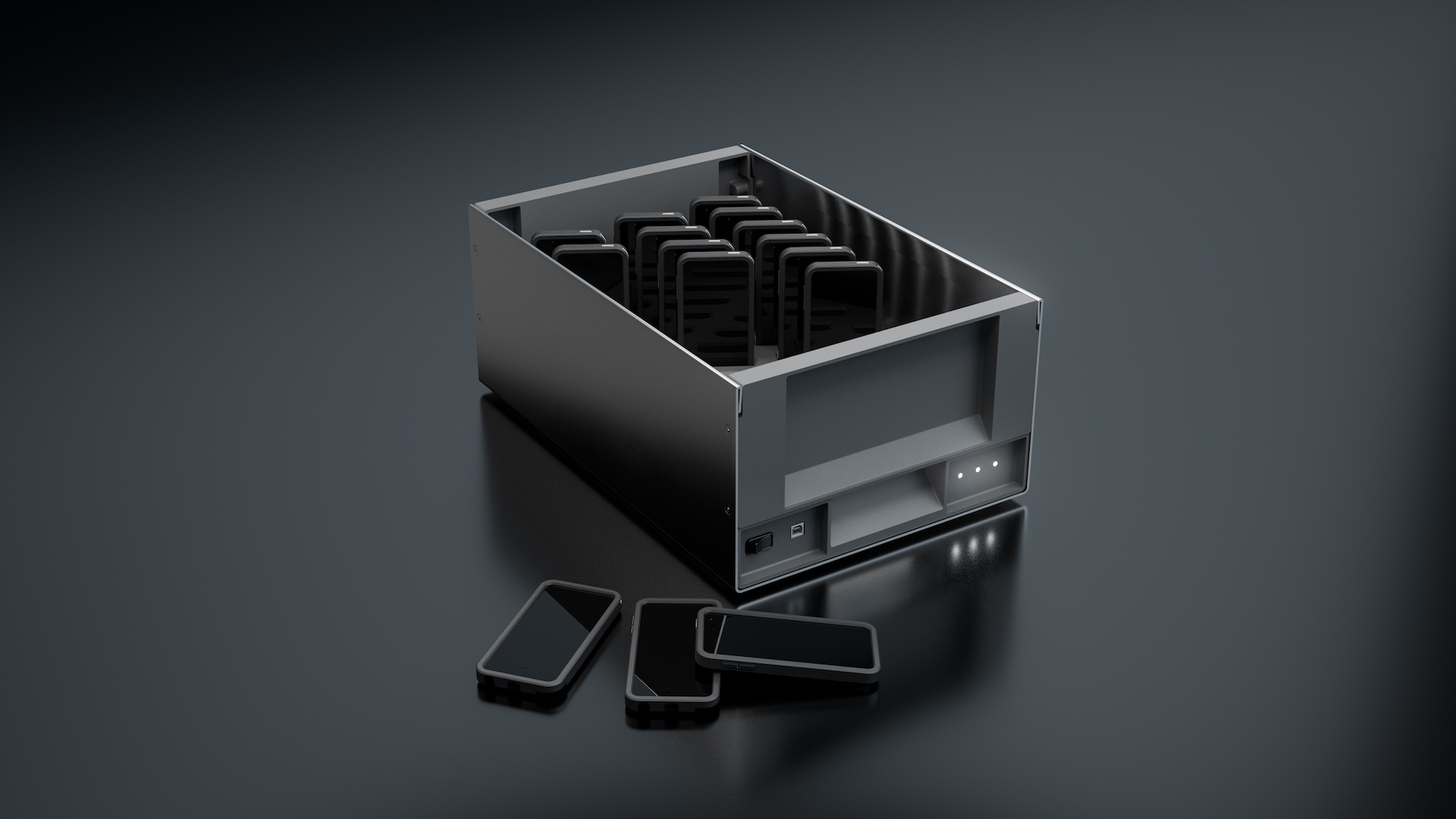
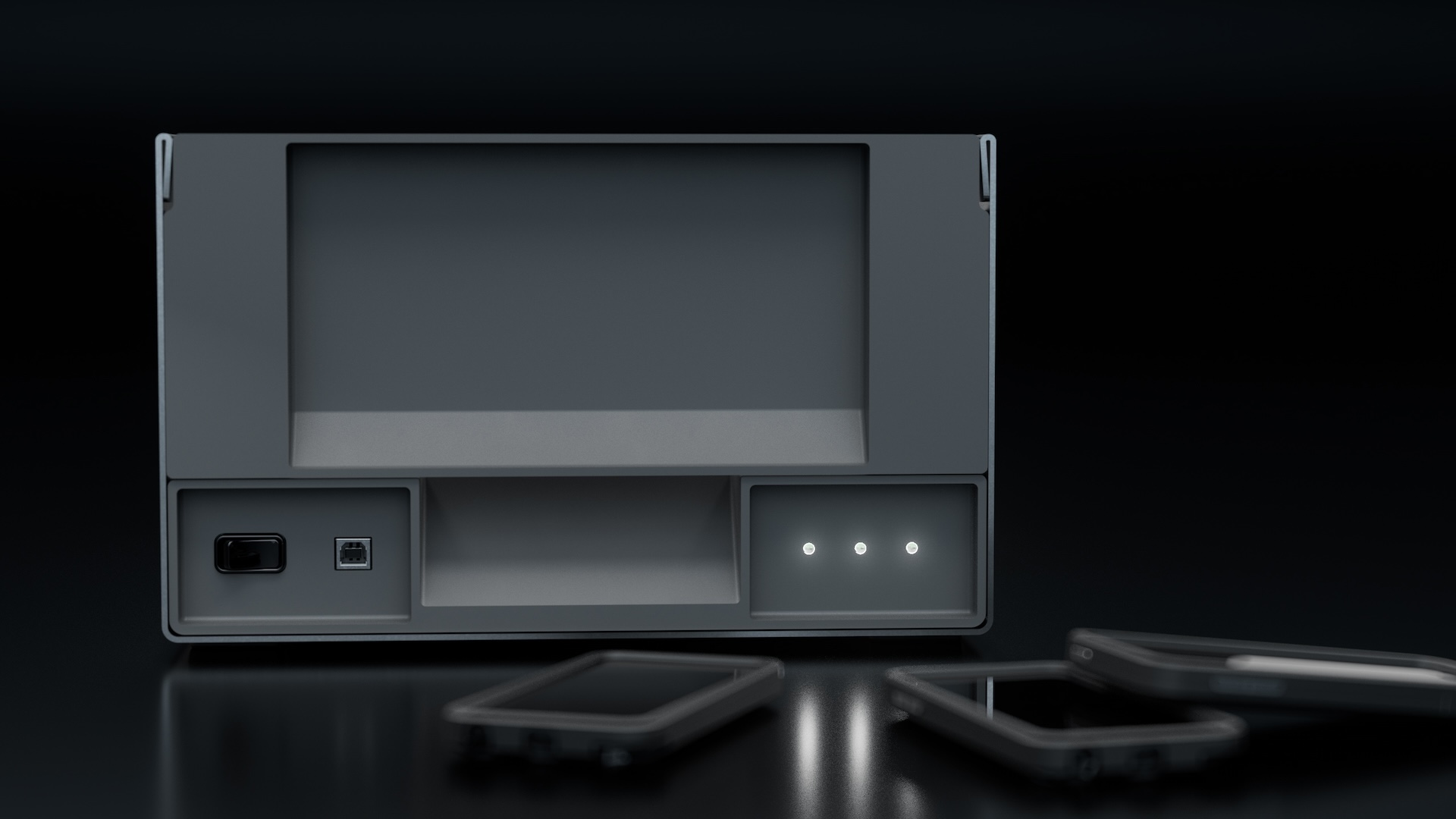
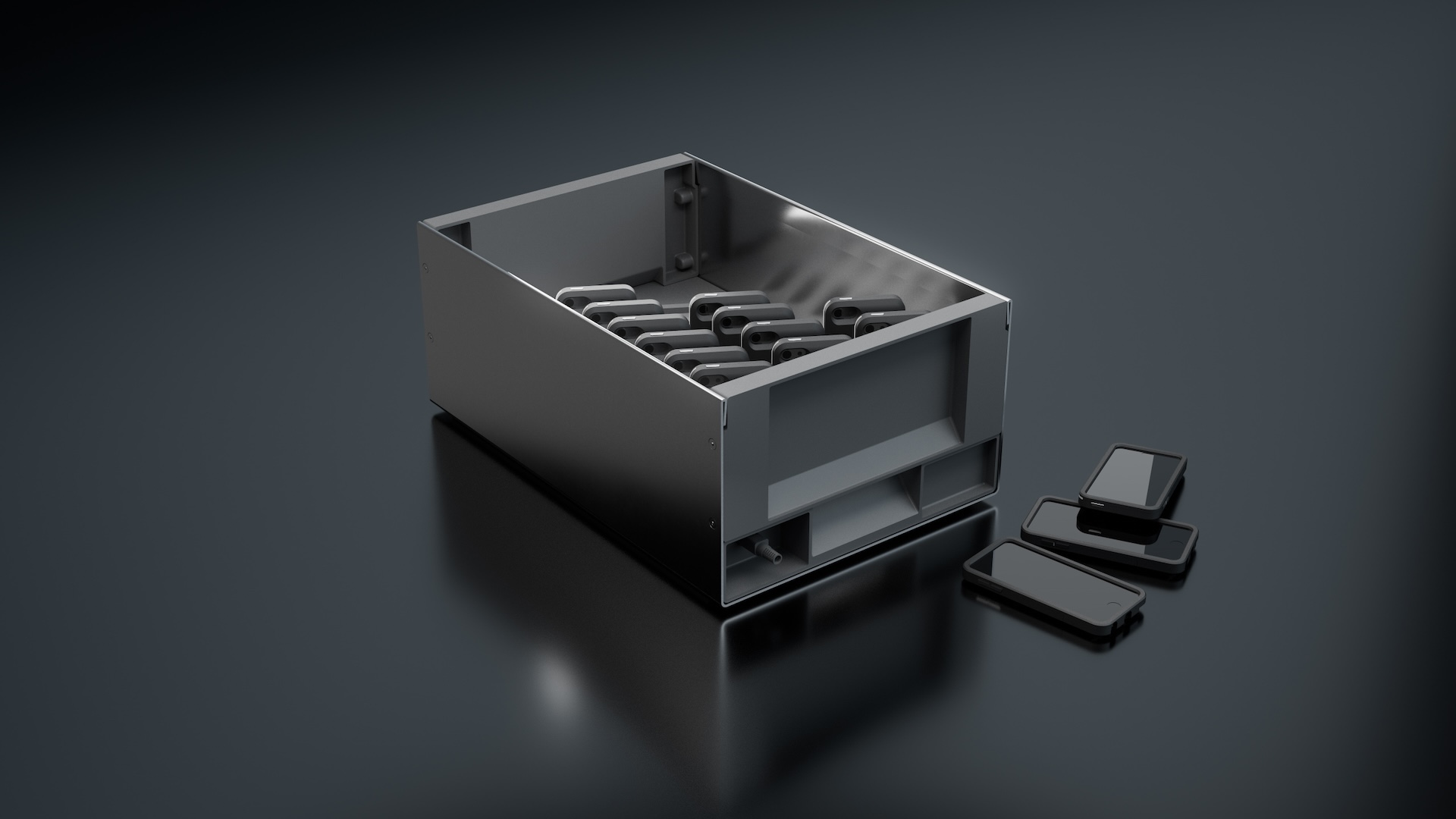
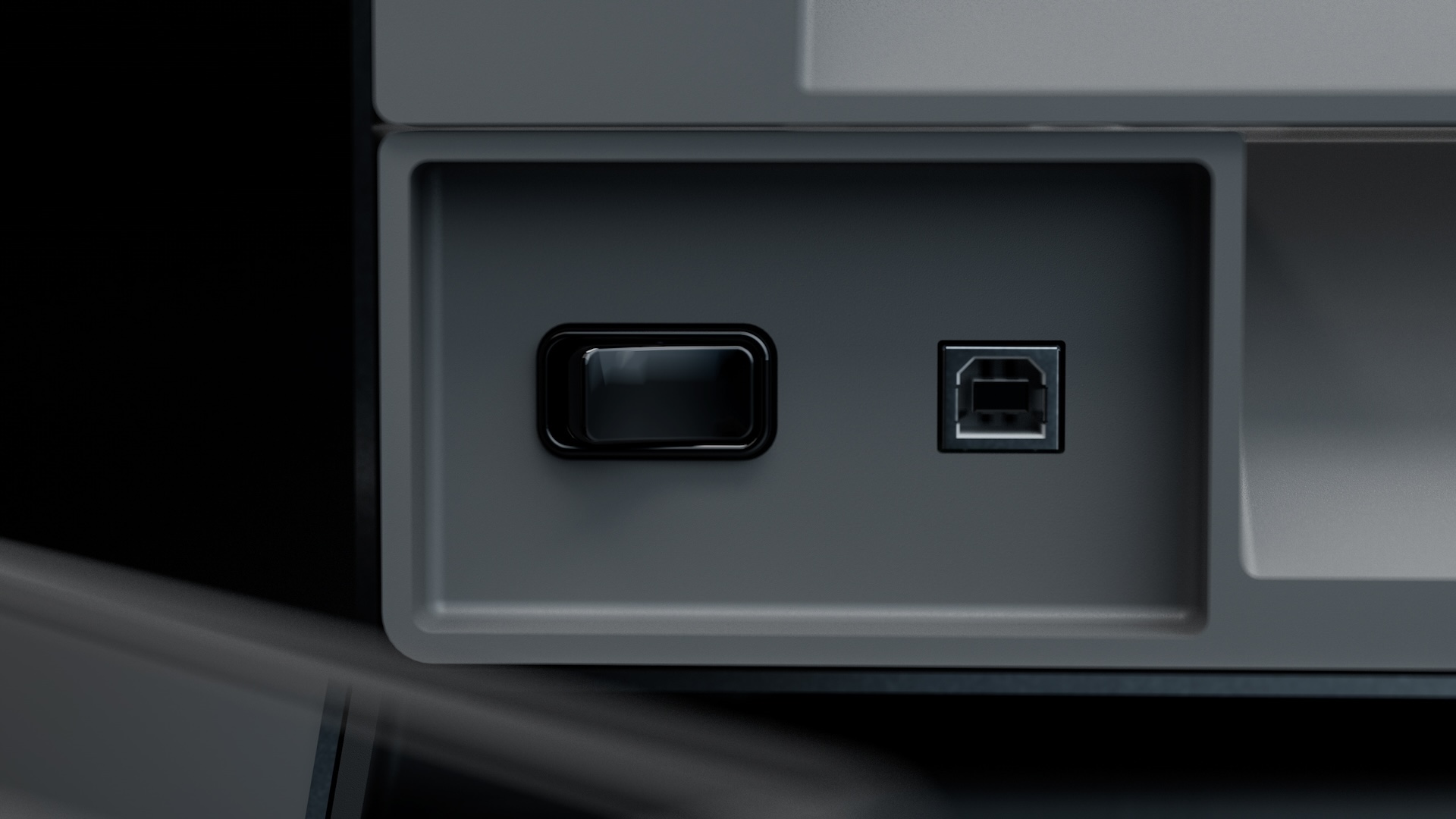
A crate holding twenty-seven iPods in their protective housings, all charging and data-connected at once. We developed, assembled and tested it in Melbourne; its 27-port USB hub carries software updates and large-scale application deployment out to the devices as well as power.
The constraint was tree depth. Operating systems limit how far USB hubs can cascade, so reaching twenty-seven ports meant a wide, shallow tree on a single large FR4 board, holding signal integrity across a long span. Rather than one central supply, high-power DC-DC conversion is distributed across that board, spreading the heat so a bay runs cool and fan-less at full load — with crates stacked ten to thirty deep on shelves.
The mechanical problem
The Lightning connectors sit in resin-cast carriers, and casting shrinkage accumulates across a twenty-seven-cell grid, so a precise board meets imprecise plastics. We tuned the shore hardness of an elastomeric boot around each connector to absorb that skew — and the imprecision of visitors dropping devices in — without transferring strain into the bought-in micro USB connector behind it. The bays survive thousands of insertion cycles.
Still running
Writing in November 2017, five years into the MONA partnership, we reported that all of the original charging hardware was still in operation, serving 100,000+ visitors a year, with a refresh then underway. Between fifty and a hundred crates were built across three generations; beyond MONA they went into the Australian War Memorial in Canberra and travelled with the Spirit of ANZAC exhibition. Art Processors has since taken the same approach into cultural spaces worldwide, including the Smithsonian.
The location half of the same MONA program is AP Locate.